Nashville Electric Service says it has finished upgrading more than 57,000 streetlights to LEDs—a citywide change residents can see on the roads they use after dark.
WSMV reported the completion November 23, citing NES and a video featuring utility CEO Teresa Broyles-Aplin and Mayor Freddie O’Connell.
Broyles-Aplin said the lights save about 2.4 million kilowatt-hours and more than $200,000 in energy costs each month. She also reported an 80% decline in maintenance volume and said the project finished two years ahead of schedule. Those are the utility’s reported results, not a guarantee of a specific reduction on an individual customer’s bill.
What the project covers
The project website describes a partnership among NES, Metro and Tennessee-based Path Company, now part of SitelogIQ. Its scope is public streetlighting within Metro; private and security lighting are excluded.
The site still contains older construction language and an earlier goal of more than 55,000 lights. The newly reported completion total is higher. Use the dated November 23 report for the completion announcement rather than reading the older timeline as a new delay.
An interactive project map identifies completed conversions, pending installations and scheduled work. Its legend marks completed lights in green. It provides project context, but should not be mistaken for a live guarantee that every lamp is functioning.
How to report a problem on your block
NES maintains a streetlight issue form for a single light out, multiple lights out, flickering, cycling on and off, a light burning during daylight, or damage to a pole or fixture.
The form asks for contact information, the closest street address and details describing the problem. If available, include the pole’s eight-digit number from its yellow tag. Those details help distinguish the light you mean from another fixture nearby.
NES says it sends an email confirmation after submission and warns that repairs may take several weeks. Completion of a conversion project does not remove the need to report individual faults.
The practical follow-up is neighborhood-specific: check what changed along your usual walk or drive, and report a precise location if a light needs attention. For another recent street project, see the Broadway barrier installation and temporary closure.
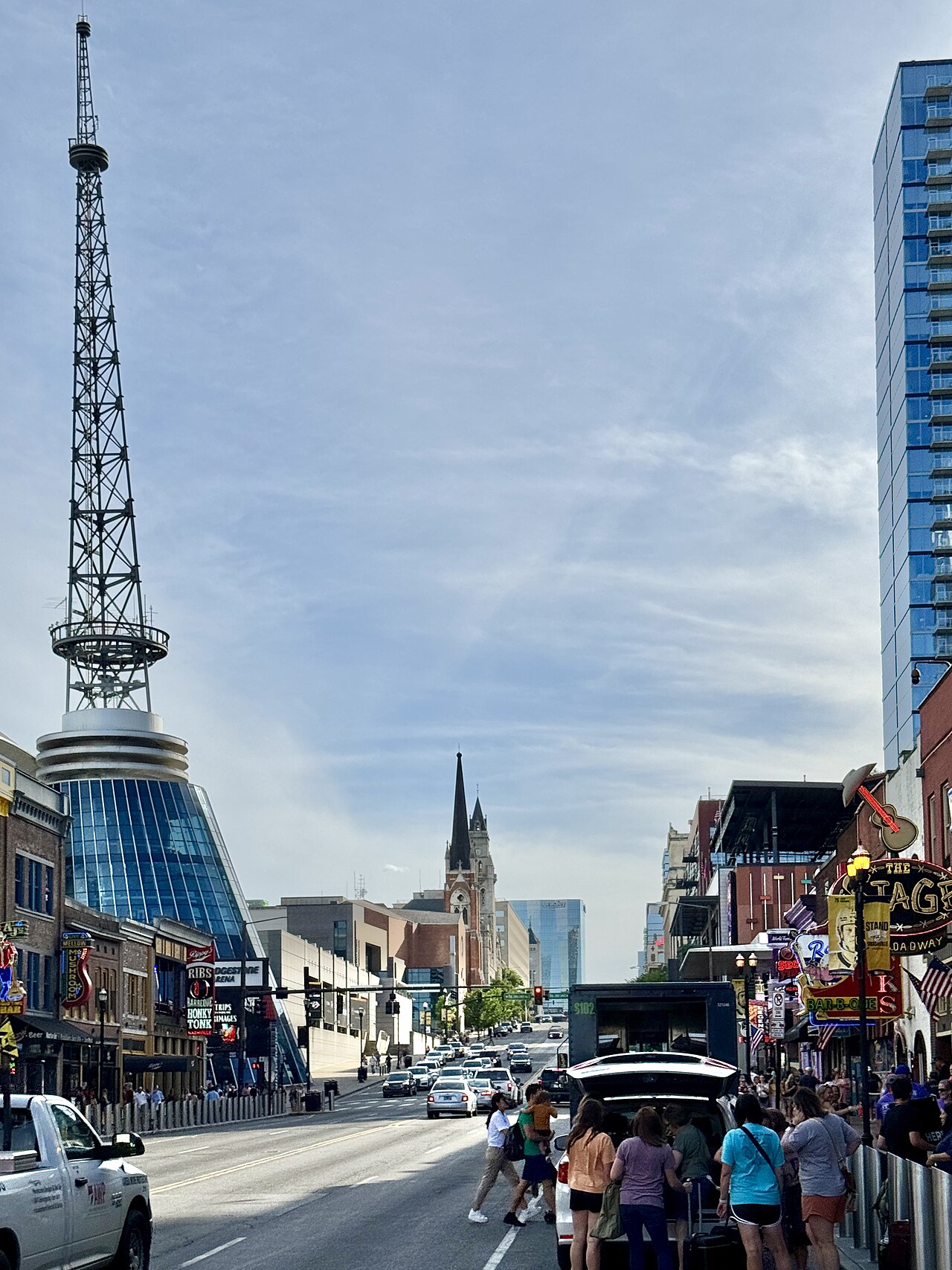
Image credit: w_lemay, May 28, 2024; CC BY-SA 2.0. Broadway file photo, not a photograph of the completed LED project. Resized. Source; license.